
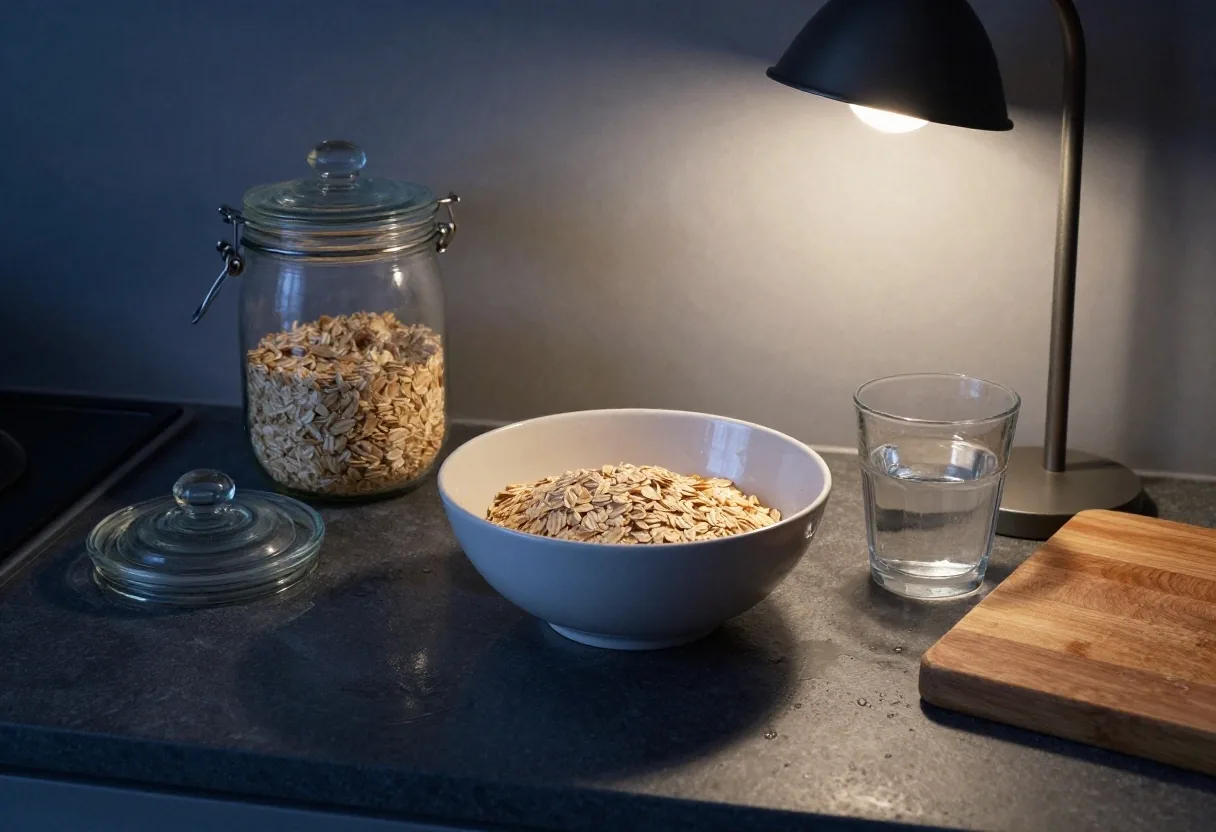
A kitchen counter at dusk with a bowl of oats, a lidded jar and a glass of water on wet slate
Nutrition guidance for UK adults

Building balanced meals for steady daily energy

Most people already know they should eat more vegetables. The harder question is how to build a meal that keeps you steady until the next one — without weighing anything or following a plan you will abandon by week three.

What a balanced meal actually contains

Four parts on one plate, not a diet to follow

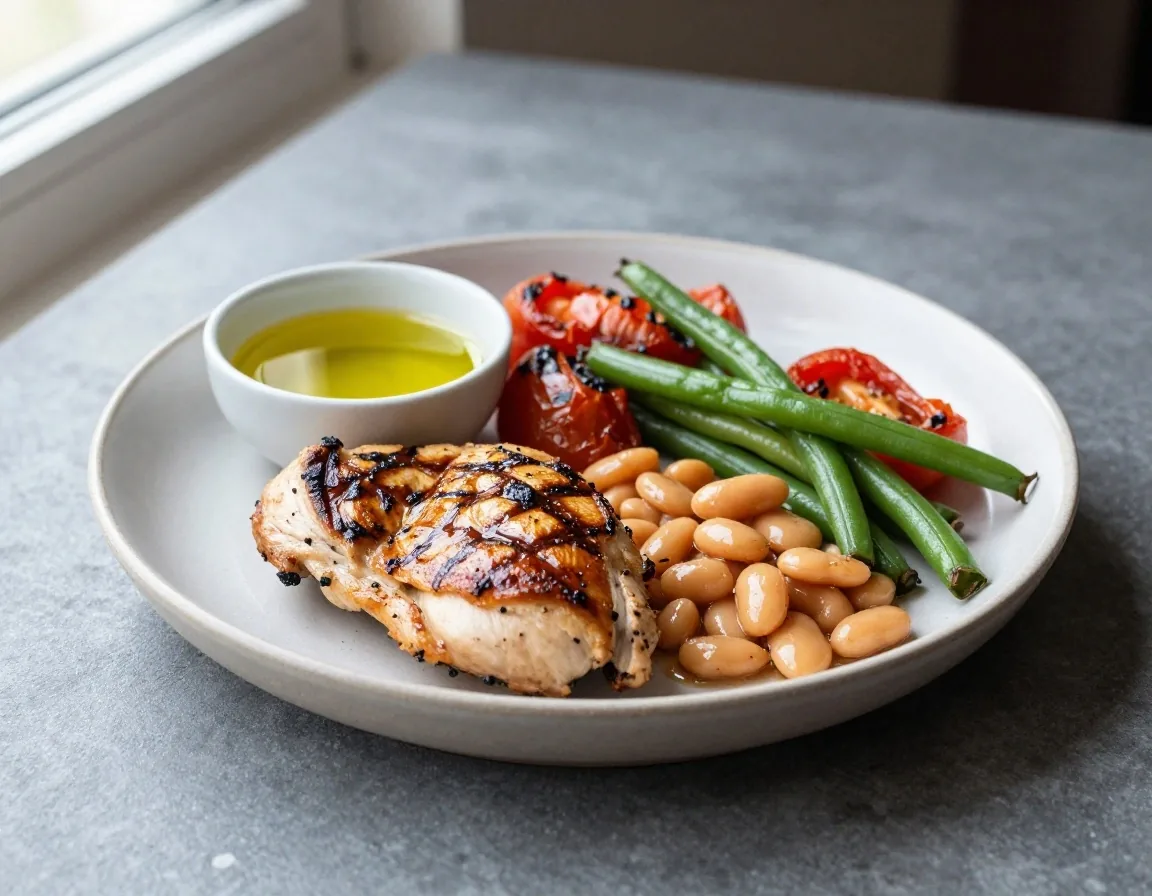
A home-cooked plate of chicken, butter beans, roasted tomatoes and green beans on a stone table

A balanced plate has a protein source, a fibre-rich carbohydrate, some vegetables or fruit, and a fa. That combination slows digestion and keeps energy steadier than a meal built on carbohydrates alone. In practice it might be eggs on wholegrain toast with tomatoes, or a chicken and bean salad with olive oil. The point is the combination, not the specific dish, so it adapts to whatever you already cook.

Protein

Eggs, Greek yoghurt, chicken, fish, beans, lentils, tofu — whichever of these already lives in your kitchen.

Fibre-rich carbohydrate

Wholegrain bread, oats, potatoes with the skin on, brown rice, beans again — they do two jobs at once.

Vegetables or fruit

Frozen, tinned and leftover all count. The volume matters less than whether it turns up at all.

A fa

Olive oil, nuts, seeds, butter, cheese. A small amount slows the meal down and makes it taste like food.

If a meal is missing one of the four, you do not need to rebuild it from scratch. Add the missing part to the plate you already made: a boiled egg, a spoon of yoghurt, a handful of peas from the freezer. That is the whole method.

Where the change actually happens

Three adjustments that carry most of the day

Breakfast, fibre and meal timing do more for steady energy than any single food. Each one is small enough to keep.

Protein at breakfast changes the morning

If you eat cereal and feel hungry by ten, the fix is usually protein rather than willpower. Greek yoghurt, eggs, beans, or last night's leftovers all work. People who move protein into breakfast often report a smaller mid-morning dip and less snacking before lunch. You do not need a large amount — just enough to stop the meal being almost entirely refined carbohydrate.


A breakfast of Greek yoghurt with berries, soft-boiled eggs and wholegrain toast on a slate worktop

Fibre, and why it is not just about digestion

Fibre slows the release of energy from a meal and feeds the bacteria in your gut. UK adults typically fall short of the recommended thirty grams a day, and the gap is usually closed with small additions rather than a new diet: berries on porridge, lentils in a soup, the skins left on potatoes, a handful of nuts. Increase it gradually, and drink enough water alongside, or you will notice the change in the wrong way.

Meal timing across a working day

Long gaps followed by a large evening meal are a common pattern, and they tend to produce an afternoon crash and poor sleep. Eating lunch at a consistent time, and keeping something small for the late afternoon, often does more than any supplement. If your job makes a fixed lunch impossible, plan the shift-friendly version rather than skipping meals and catching up at nine at night.

Daily practice

Shopping, drinking and cooking for other people

Three parts of everyday eating that are easy to overthink, and easier to run on one habit each.

Reading UK food labels without overthinking it

The traffic-light labels on UK packaging are a reasonable shortcut. For everyday items, aim for more green and amber than red on saturated fa, salt and added sugar. That single habit improves most shopping baskets without requiring you to compare every product in the aisle. It also leaves room for foods you enjoy that do not score well, which is how a pattern survives long enough to matter.

Front-of-pack labels vary in layout between supermarkets, but the colour bands mean the same thing on all of them.

Hydration through the day

Thirst and fatigue feel surprisingly similar, and mild dehydration is a common reason for a flat afternoon. Keeping a glass or bottle within reach and drinking with meals is enough for most people. Tea and coffee count toward fluid, though caffeine late in the day affects sleep. Alcohol is the one to watch, since it disrupts sleep more than most people expect.

Read the sleep and recovery guidance

Eating well when someone else cooks

Households rarely share one appetite. If you are cooking for a family, change the base rather than the whole dish: add a protein to the pasta, put the vegetables on the table separately, keep a portion of the meal plain for the person who wants it that way. This sounds obvious, and it is the difference between a change that lasts and one that causes friction every evening.

A separate bowl on the table costs nothing and removes most of the argument.

A family kitchen at dusk with a weekday meal plated and a bowl of vegetables set to one side
The changes that tend to stick

Two ways to start, and what each one asks of you

Start with breakfast and lunch, because they set up everything after them. Both routes below work; they differ in how much of your week they touch.

Add to what you already eat

Adjust one meal, keep the rest

Add one vegetable and one protein to a meal you already cook, rather than replacing the meal. Nothing leaves your week — two things join it.

  • Keeps meals you already enjoy
  • Changing the base, not the whole dish
  • No weighing, no tracking, no app
Book a consultation

Best starting point if your week is already full and you want the smallest possible first step.

Rebuild the two anchor meals

Rebuild breakfast and lunch properly

Keep the evening meal where it is and give the two daytime meals a real structure. Steadier afternoons, better sleep, at the cost of a fortnight of attention.

  • Protein anchored at breakfast
  • Lunch at a consistent time
  • Fibre raised gradually, with water
Ask about your meal pattern

Give any change two weeks before judging it. Small, specific adjustments hold up better than a complete overhaul.

Common questions

Questions people ask before they change anything

Do I need to count calories or weigh food?

No — and for most people it gets in the way. Structure does the work here: protein, fibre-rich carbohydrate, vegetables and a fa on the same plate, at roughly the same times each day. You can keep a plate in proportion by eye far longer than you can keep a food diary, which is the point.

Is thirty grams of fibre a day realistic?

It is, but not in one jump. Add one source per meal over a few weeks — berries on porridge, lentils in soup, skins left on potatoes — and drink water alongside each addition. Fibre raised too quickly is the most common reason people give up on it, since the first week feels worse than the problem they were solving.

My job makes a fixed lunch impossible. What then?

Plan the shift-friendly version instead of skipping meals. Something small you can eat in five minutes — yoghurt, nuts, a sandwich kept back from the morning — keeps the gap from stretching to nine at night, which is what turns a long day into a large late meal and a poor night's sleep.

Do I need to give up the foods I actually enjoy?

No. Everyday items are where the label habit helps most; meals that exist for pleasure are not the ones to audit. A pattern that leaves no room for them is a pattern you stop running after a few weeks, which is a worse outcome than the occasional red band on a packet.

How long before a change is worth judging?

Give it two weeks before deciding anything. The first few days usually feel neutral, and that is not evidence that it failed — it is the adjustment period. If something is still unworkable at the two-week mark, change the version rather than abandoning the habit.

Where to go next

Bring your meal pattern to a nutritionist

If your afternoons still dip after a fortnight of small changes, or the household cooking makes the plan hard to hold, that is the point at which a conversation helps. Bring what a normal week looks like; we will work from there.

Fatigue Free Wellness · 35 Colmore Row, Business District, London, W1G 9PP · Monday to Friday 9:00 AM – 6:00 PM, Saturday 10:00 AM – 2:00 PM, Sunday closed.

This page offers general lifestyle guidance on balanced eating. It is not medical advice, and it does not replace care from your own clinician.